
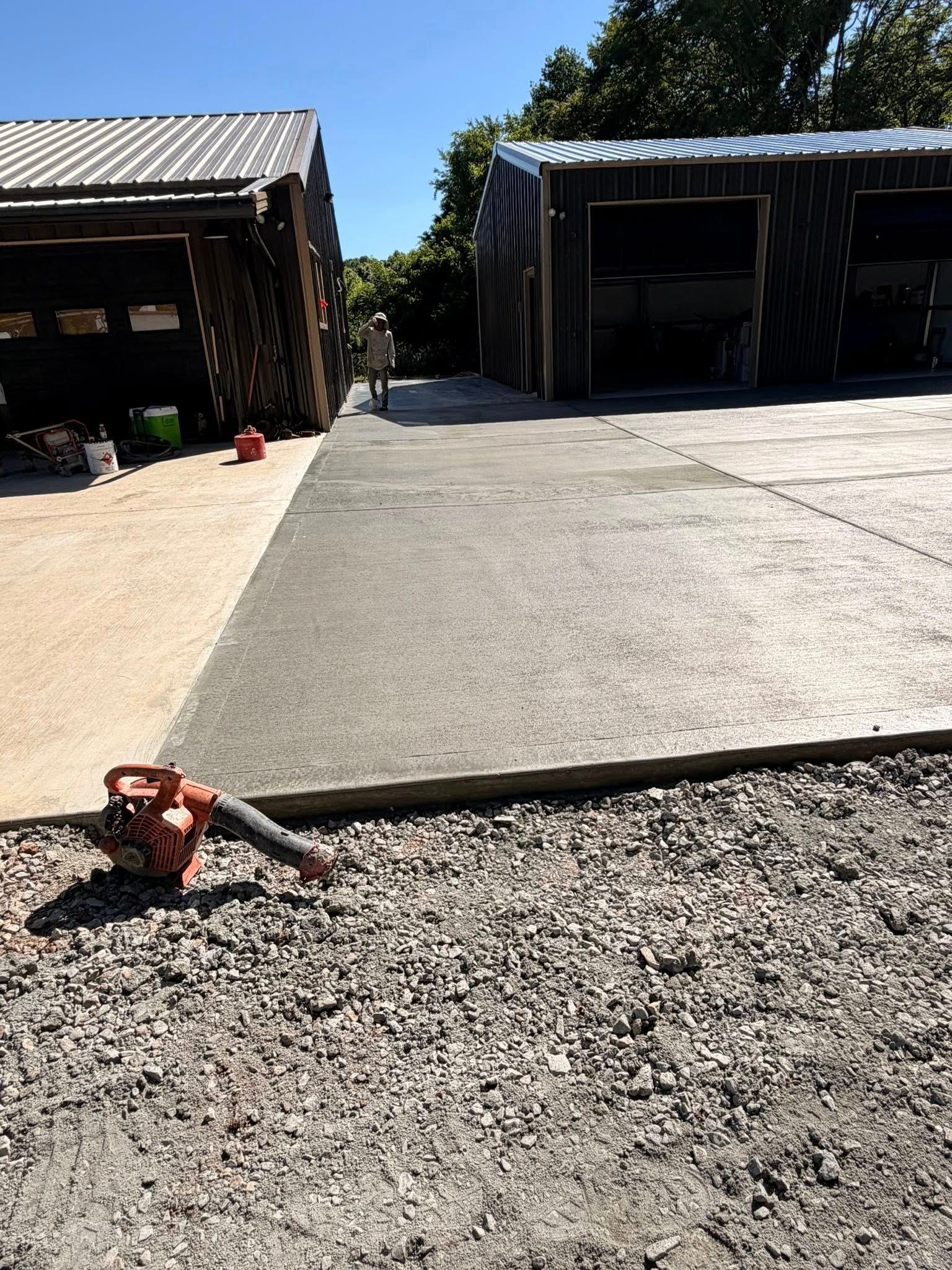
Flatwork Designed for High-Traffic Business Use
Commercial Concrete Services in Morristown for businesses needing durable parking areas, entryways, and structural slabs
Retail properties, warehouses, and commercial developments require concrete surfaces that handle constant vehicle traffic, heavy loading, and daily foot traffic without cracking or settling. RM Concrete Services LLC provides commercial concrete installation for slabs, sidewalks, entryways, parking areas, and structural flatwork throughout Morristown and surrounding commercial districts. East Tennessee's ongoing development has increased demand for dependable commercial concrete work that meets safety standards and performs under sustained use.
Commercial installations involve site evaluation, base preparation with proper compaction, placement of reinforcement steel matched to anticipated loads, and finishing methods that create slip-resistant, even surfaces. Proper grading ensures parking areas drain correctly, preventing water accumulation that weakens the base and creates liability hazards during freezing weather.
Arrange an on-site evaluation to review your commercial property's concrete needs and project timeline.
How Commercial Concrete Addresses Business Requirements
Commercial concrete projects begin with understanding the load requirements, traffic patterns, and operational constraints of the property. Slabs for warehouse floors require different reinforcement and thickness than retail sidewalks, and parking areas must accommodate turning radii for delivery vehicles while maintaining drainage standards. Scheduling is coordinated to minimize disruption to business operations, with pours timed to allow sections to cure before adjacent areas are accessed.
After installation, your property will have level, stable surfaces that support the intended use without cracking under load or developing trip hazards from settling. Properly reinforced concrete slabs distribute weight evenly, and correctly graded parking areas shed water efficiently, reducing maintenance costs and extending surface life. Business owners notice fewer complaints about uneven pavement, standing water, or surfaces that deteriorate quickly under heavy use.
Quality commercial concrete work includes control joints placed at planned intervals to manage how the concrete responds to temperature changes, preventing random cracking. The decision to use wire mesh, rebar, or fiber reinforcement depends on the application, with structural slabs requiring engineered reinforcement and lighter-duty sidewalks using different methods. Understanding these differences prevents under-building surfaces that fail prematurely or over-building where simpler solutions would perform adequately.
What Property Managers Usually Ask
Commercial concrete decisions involve balancing durability, budget, and operational timing, so having clear information helps property managers and business owners make informed choices.
What thickness is required for commercial parking areas?
Most commercial parking surfaces use four to six inches of reinforced concrete depending on expected vehicle weights, with areas designated for delivery trucks or heavy equipment requiring thicker slabs and stronger reinforcement than standard parking spaces.
How is project scheduling managed to avoid business disruption?
Work is planned in phases when possible, allowing portions of the property to remain accessible while other sections are under construction, with concrete placement timed so curing happens during off-hours or low-traffic periods.
Why does commercial concrete crack even when properly installed?
Concrete naturally shrinks as it cures, so control joints are cut or formed at regular intervals to direct cracking to predetermined locations rather than allowing random cracks to develop across the surface.
How does Morristown's commercial growth affect concrete needs?
Increased development means more businesses require parking expansions, building additions, and infrastructure upgrades, creating demand for commercial concrete services that meet current building codes and accommodate higher traffic volumes than older installations were designed to handle.
What preparation is required before concrete placement?
Site preparation includes excavating to the required depth, removing unstable soil, compacting the base material to prevent settling, installing forms to contain the pour, and placing reinforcement according to engineering specifications or standard practices for the application.
RM Concrete Services LLC coordinates commercial concrete projects with attention to project specifications, safety standards, and efficient execution. Contact the office to discuss your commercial property's concrete requirements and request a project estimate.