
Slabs Engineered for Equipment and Vehicles
Garage Floor Slabs in Morristown for new construction, detached garages, and workshop spaces requiring reinforced surfaces that support heavy loads
Properties adding detached garages or workshop buildings need floor slabs thick enough to support vehicle weight and equipment storage without cracking or settling over time. RM Concrete Services LLC installs reinforced garage floor slabs for new construction and building additions across Morristown, Greeneville, Sevierville, and surrounding areas using specifications that account for concentrated loads at jack points and the daily stress of vehicles entering and exiting the space. Proper site preparation addresses East Tennessee's moisture conditions, including vapor barriers that prevent ground moisture from migrating through the slab and causing surface dampness that affects stored materials or leads to coating failures when epoxy finishes are applied later.
Garage slab installation begins with excavation to remove organic topsoil and unstable material, followed by graded aggregate base compacted to density specifications that prevent settling. The concrete thickness typically ranges from four to six inches depending on whether the garage will house passenger vehicles, trucks, or heavy equipment. Wire mesh or rebar reinforcement adds tensile strength that reduces cracking from temperature changes and load stress.
Request a garage slab installation estimate to review site preparation needs and reinforcement requirements for your building project.
Why Site Preparation Determines Floor Performance
Garage floors require attention to grading that directs any water toward door openings rather than allowing pooling in corners or against back walls. This slope remains subtle enough that vehicles don't roll but sufficient that spills or tracked-in water moves toward drains or exits naturally. Finishing techniques produce smooth surfaces suitable for tools and floor jacks without the rough texture used on outdoor concrete, since garage slabs don't require the same slip resistance needed for wet exterior conditions.
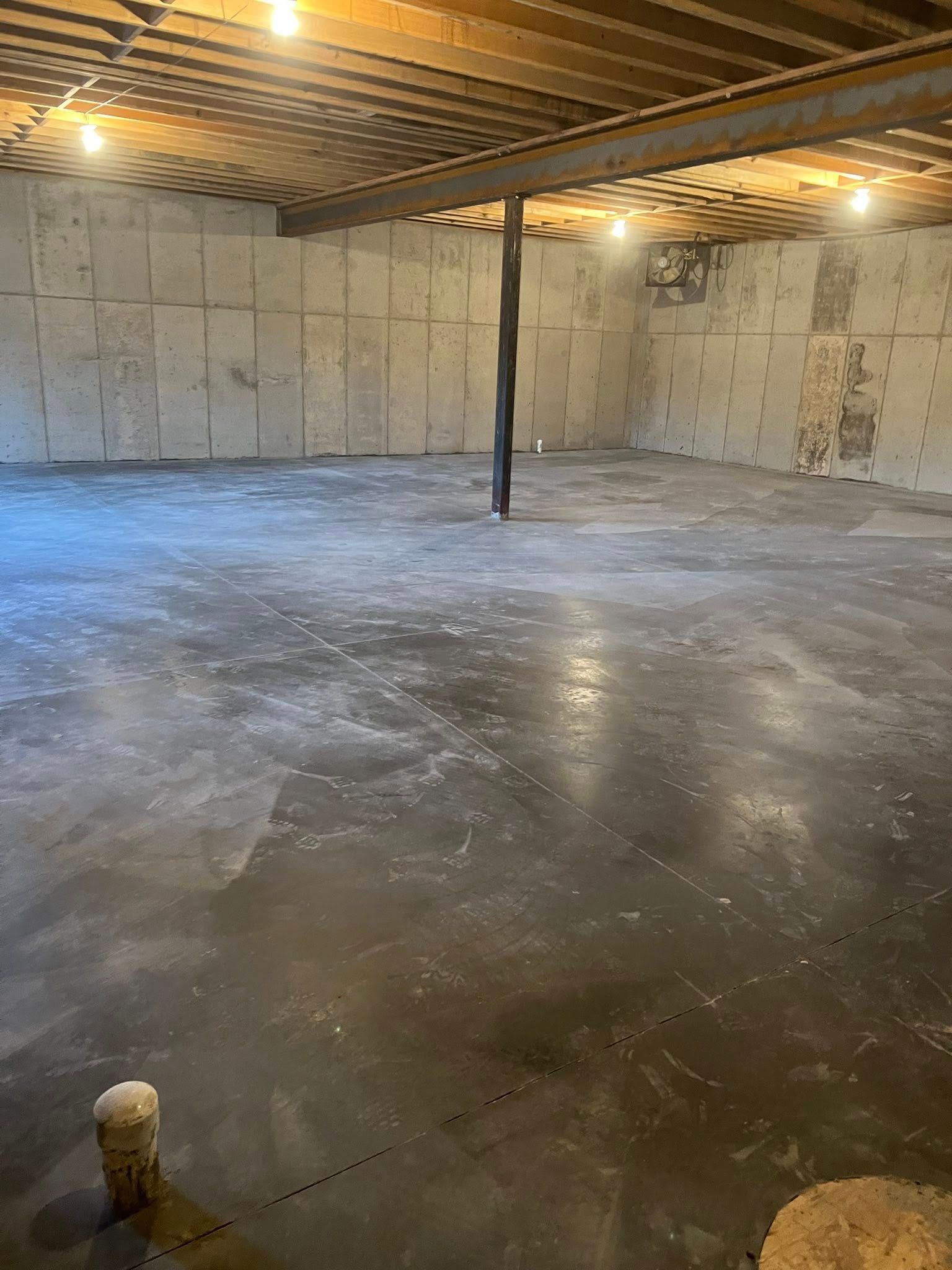
Once cured, the slab provides a flat, stable surface that supports vehicle weight without deflection or cracking at door thresholds where concentrated tire loads occur during entry. You notice smooth rolling for floor jacks and carts, with no high spots that catch equipment wheels or low areas where fluids collect. The floor remains dry without moisture wicking up through the concrete, allowing cardboard storage and preventing rust on tools or parts that contact the surface.
Garage slabs serve as the foundation for future improvements including epoxy coatings, floor drains, or embedded anchor points for equipment mounting. Initial installation establishes the structural integrity and levelness that these upgrades depend on, making proper concrete placement critical even when aesthetic finishes aren't applied immediately. Slabs poured with correct thickness and reinforcement avoid the costly repairs that become necessary when undersized floors crack under loads they weren't designed to carry.
Questions Before Starting Your Project
Garage floor projects prompt questions about specifications, preparation work, and how concrete slabs accommodate different building uses and future modifications.
What thickness does a garage slab need for vehicle storage?
Standard passenger vehicles require four-inch slabs with wire mesh reinforcement, while heavier trucks or equipment benefit from six-inch thickness with rebar to distribute concentrated loads and reduce cracking risk at high-stress points.
How does moisture protection work under garage floors?
Polyethylene vapor barriers placed between the aggregate base and concrete prevent ground moisture from migrating upward through the slab, reducing dampness that causes coating adhesion problems and protects stored items from humidity damage.
Why do garage floors need different finishes than driveways?
Interior slabs receive trowel finishes that produce smoother surfaces suitable for foot traffic and equipment rolling, while exterior concrete uses broom texture for slip resistance that isn't necessary in covered garage spaces.
Can floor drains be added during slab installation in Morristown?
Drains require grading the entire slab toward the drain location and connecting to either municipal sewer systems or dry wells, adding complexity that must be planned during initial site preparation rather than retrofitted after concrete cures.
When can vehicle parking begin after slab installation?
Light foot traffic is safe within 24 hours, but vehicle weight should wait seven days to allow concrete to reach sufficient strength that tire loads won't mark the surface or cause edge damage at the garage door threshold.
RM Concrete Services LLC handles garage floor slab installation for residential and light commercial applications, working with builders and property owners to meet structural requirements and site conditions specific to each project. Schedule a site evaluation to discuss your garage construction plans and receive a detailed slab installation estimate based on building dimensions, intended use, and ground conditions at your Morristown property.