
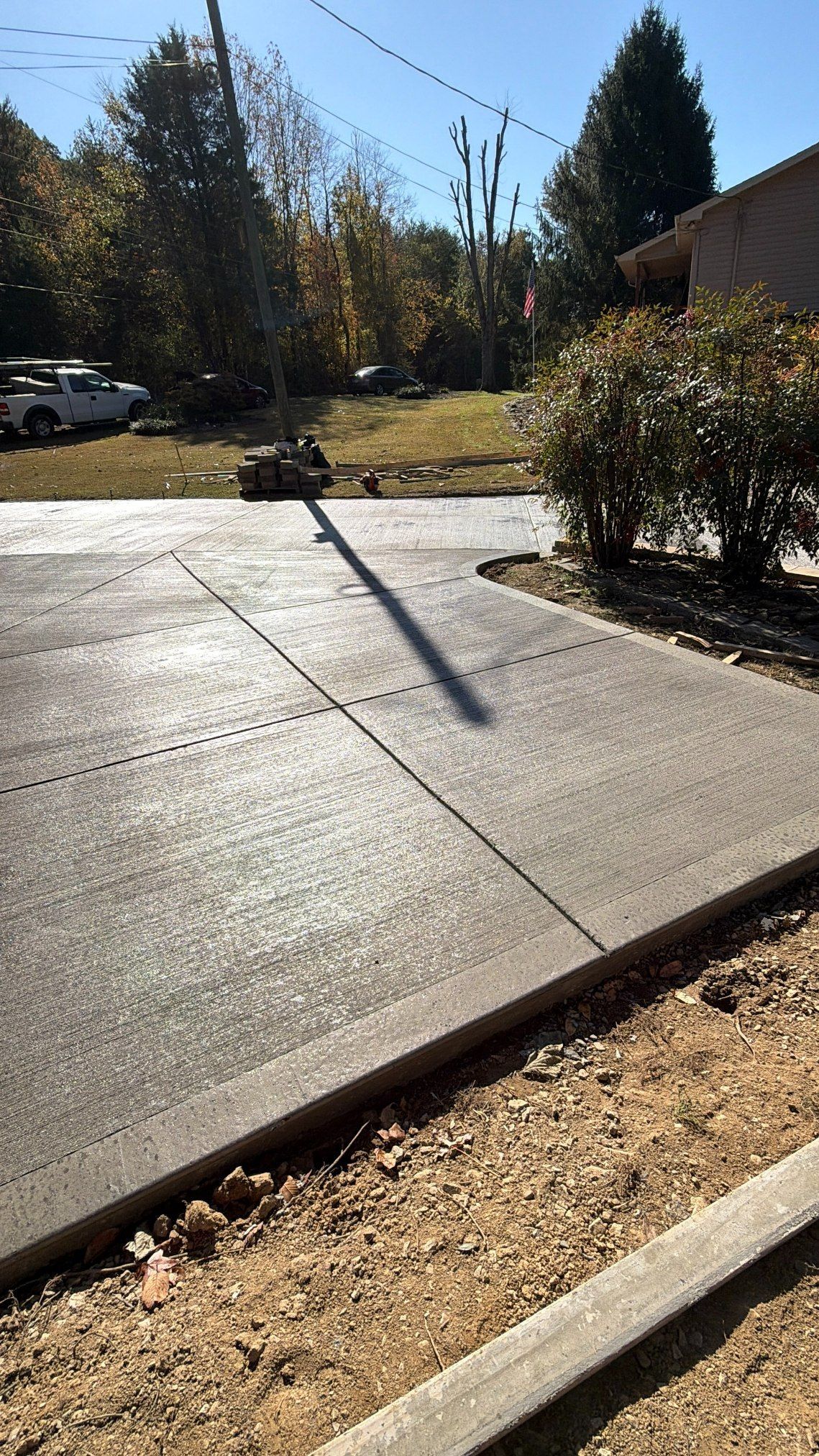
New Pours That Support Long-Term Performance
Concrete Installations in Morristown for new foundations, driveways, walkways, and outdoor surfaces
A properly installed concrete surface starts with stable ground beneath it, correct reinforcement for the intended load, and finishing that seals the surface against moisture penetration and weathering. Homeowners and contractors need new concrete pours when adding outdoor living spaces, replacing failed surfaces, or completing new construction projects. RM Concrete Services LLC handles concrete installations for foundations, patios, driveways, walkways, slabs, and outdoor surfaces throughout Morristown, Rogersville, Greeneville, and surrounding areas with methods suited to East Tennessee soil and weather conditions.
Installation begins with site preparation, which includes excavation, grading to establish drainage, and compacting the base material so the concrete rests on stable ground. Forms are built to the project dimensions, reinforcement is placed, and concrete is poured, leveled, and finished to create the final surface. East Tennessee's clay-heavy soils require adequate compaction to prevent settling, and the region's freeze-thaw cycles make proper finishing critical to prevent surface deterioration.
Schedule a consultation to review site conditions and discuss options for your new concrete installation project.
What Changes After Professional Installation Completes
Professional concrete installation involves evaluating soil stability, determining the correct thickness and reinforcement for the application, and using finishing techniques that protect the surface from weather-related damage. Site grading directs water away from structures, forms are set level, and concrete is placed in a single continuous pour whenever possible to avoid cold joints that create weak points. Finishing methods range from basic broom textures for traction to decorative stamping or exposed aggregate for aesthetic purposes.
Once cured, the concrete surface provides a stable, level area that supports its intended use without shifting or cracking under normal conditions. You'll notice clean edges, consistent thickness, and proper slope that prevents water from pooling. Decorative finishes, if included, add visual interest while maintaining structural integrity, and the surface resists the flaking and spalling that occur when water enters poorly sealed concrete and freezes.
Functional and decorative concrete options can be tailored to different property needs, with choices including colored concrete, stamped patterns that replicate stone or brick, and exposed aggregate that reveals the natural stone within the mix. These options add customization without sacrificing durability, though they require additional finishing steps and affect project timelines. The choice depends on the location, budget, and how the surface integrates with existing landscaping or architectural features.
Questions Before Starting Your Project
Understanding the installation process helps property owners make decisions about materials, finishes, and timing that align with their needs and budget.
What site preparation is necessary before concrete placement?
Excavation removes existing material to the required depth, unstable soil is replaced with compactable base material, the area is graded to establish drainage, and the base is compacted mechanically to prevent future settling that would crack the concrete.
How does East Tennessee soil affect concrete installation?
Clay soils common in the Morristown area retain moisture and expand when wet, then shrink when dry, so adequate base preparation and compaction are essential to prevent the concrete from cracking as the ground beneath it shifts through seasonal moisture changes.
When should reinforcement be added to concrete pours?
Reinforcement such as rebar or wire mesh is used in applications where the concrete will support significant weight, span unsupported areas, or experience stress from heavy use, with the type and spacing determined by the load requirements and structural specifications.
What is the difference between a broom finish and decorative finishes?
A broom finish drags stiff bristles across the surface to create texture for traction and is the most common and economical option, while decorative finishes use stamps, stains, or exposed aggregate techniques to add color and pattern at additional cost and with longer installation time.
How long does new concrete need to cure before use?
Concrete reaches sufficient strength for foot traffic within 24 to 48 hours under normal conditions, but vehicle traffic should be avoided for at least seven days, and full curing continues for several weeks as the concrete continues to harden and develop maximum strength.
RM Concrete Services LLC completes concrete installations with attention to site conditions, structural requirements, and finishing quality. Request an estimate to discuss your installation project and review options for new concrete surfaces.