
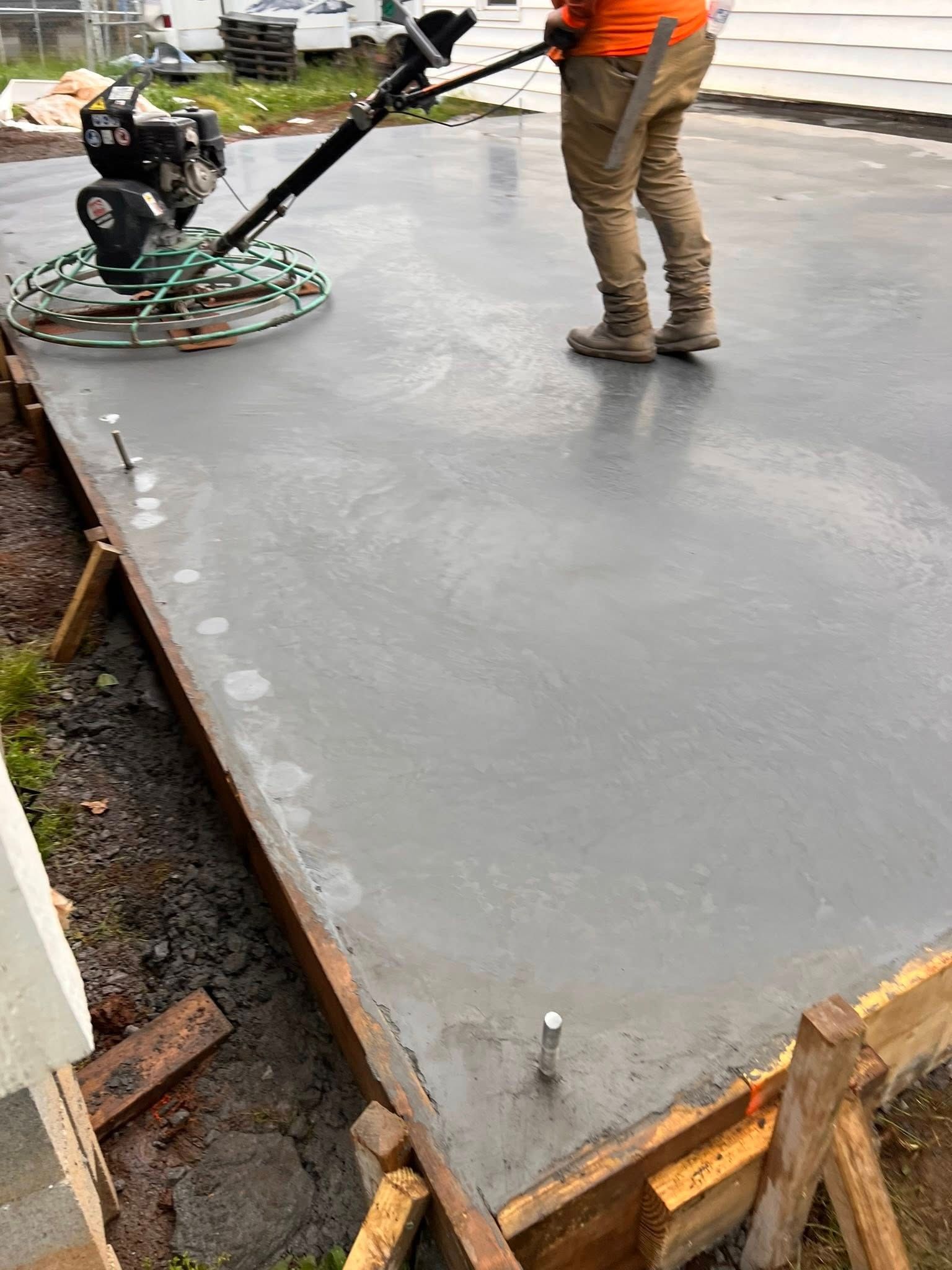
Structural Support Poured to Specification
Concrete Foundations in Morristown for residential additions, garages, commercial buildings, and new construction
Foundation concrete must support the structure above it for decades without settling, cracking, or shifting, which requires precise site preparation, correct reinforcement placement, and concrete poured to meet engineering specifications. Builders and property owners need dependable foundation work when adding garages or residential additions, constructing new commercial buildings, or replacing failed foundations on existing structures. RM Concrete Services LLC handles slab foundations and structural concrete work throughout Morristown, Sevierville, Greenville, and surrounding areas with methods suited to East Tennessee terrain and the load requirements of the planned structure.
Foundation installation begins with excavation, careful grading to establish a level base, compaction of soil or placement of engineered fill, and installation of reinforcement steel before concrete placement. East Tennessee's variable soil conditions require stable bases that resist settling, and proper drainage around the foundation prevents water accumulation that undermines structural support over time.
Request a foundation estimate to discuss project specifications and site-specific requirements.
What Proper Foundation Construction Involves
Foundation concrete work starts with verifying that excavation depth, dimensions, and base preparation meet the project plans and local building requirements. Reinforcement is placed according to structural specifications, with rebar tied in grids that distribute loads and resist cracking. Forms are built level and braced to withstand the pressure of wet concrete, and concrete is placed in a continuous pour to avoid cold joints that create weak points in the foundation.
Once cured, the foundation provides a stable, level platform that supports the structure without settling or developing cracks that compromise structural integrity. You'll notice clean edges, uniform thickness, and proper elevation that allows for drainage away from the foundation perimeter. The foundation remains stable through seasonal ground movement and temperature changes, providing long-term support that meets the performance standards required for safe construction.
Slab foundations differ from pier-and-beam or basement foundations in that the concrete is poured directly on a prepared base at ground level, creating both the foundation and the floor surface in one continuous element. This approach works well in areas without significant frost depth requirements and provides a stable platform for residential and light commercial structures. The thickness, reinforcement, and edge details vary based on soil conditions, building loads, and whether the slab will support load-bearing walls or serve as a simple floor base.
What Property Owners Usually Ask
Foundation work involves precision and adherence to specifications, so understanding the process helps ensure the structure starts with a solid base.
What site preparation is required before pouring a foundation?
Excavation removes topsoil and unstable material to reach competent bearing soil, the area is graded level, base material is compacted or engineered fill is placed if needed, and perimeter forms are built to contain the concrete and establish the foundation edges.
How does reinforcement strengthen concrete foundations?
Steel rebar placed in a grid pattern and tied at intersections prevents the concrete from cracking under load and distributes weight evenly across the foundation, with bar size, spacing, and placement depth determined by structural engineering or building code requirements for the specific application.
Why is continuous pouring important for foundation slabs?
Pouring the entire foundation in one session avoids cold joints where separately poured sections meet, which can create weak points that crack under stress or allow water infiltration over time.
How does East Tennessee terrain affect foundation construction?
Variable soil composition, clay content that expands and contracts with moisture changes, and localized drainage patterns all require attention to base preparation and perimeter drainage to prevent settling or water accumulation that compromises foundation stability.
What happens after the foundation is poured?
The concrete cures for several days before forms are removed and construction continues, with full strength developing over weeks as the chemical curing process completes, and proper curing conditions maintained to prevent surface cracking or weakened concrete.
RM Concrete Services LLC completes foundation concrete work with precision, adherence to project specifications, and attention to structural performance. Builders and property owners can request estimates for foundation projects and discuss site-specific requirements.